

Dispatch Software For NEMT
Dispatch Software For NEMT
If you are running a non-emergency medical transportation business, dispatch is where your entire operation either holds together or falls apart. The wrong dispatch software for NEMT means missed pickups, angry brokers, denied claims, and drivers calling in with no idea where they are supposed to be next. The right one means your dispatcher handles twice the trip volume with half the stress, and your billing team stops chasing down missing documentation at the end of every week.
This guide breaks down what to look for when evaluating dispatch software for NEMT, what separates platforms that actually work from ones that look good in a demo, and how ActiveRoute approaches the dispatch problem differently.
Why NEMT Dispatch Is Different From Regular Dispatch
Generic dispatch software is built for courier runs, delivery routes, or taxi fleets. NEMT dispatch has an entirely different set of requirements that generic tools simply are not built to handle.
Every trip in a NEMT operation involves a patient with specific mobility needs, a vehicle with specific certifications, a broker or payer with specific billing requirements, and a pickup window that cannot slip because the patient has a dialysis appointment or a chemotherapy session. Get any of those variables wrong and you are not just late, you are potentially out of compliance and facing a denied claim.
NEMT dispatch software has to handle all of that complexity automatically, not just give your dispatcher a map and a list of addresses.
Key Features to Look for in NEMT Dispatch Software
Real-Time Fleet Visibility
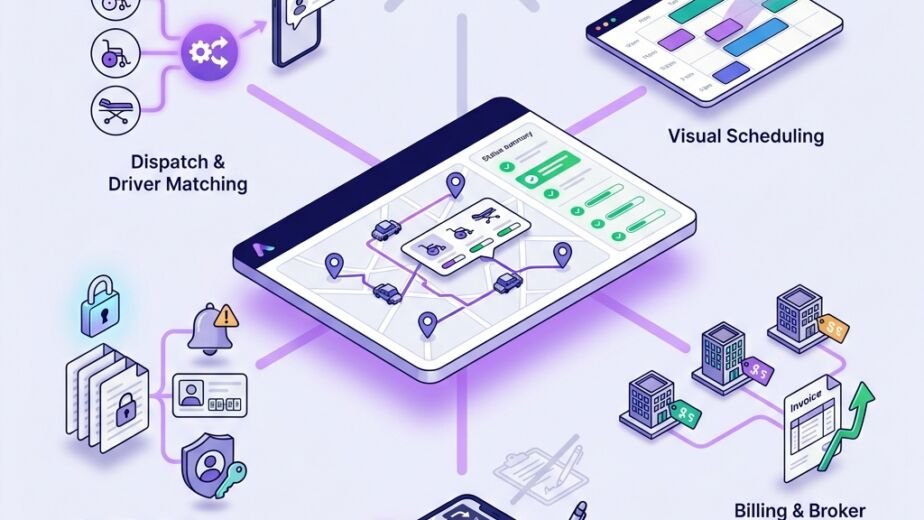
Your dispatcher needs to see every vehicle on a live map at all times. Not a map that refreshes every five minutes, a genuinely real-time view of where every driver is, what trip they are on, and when they will be available for the next assignment. Without this, dispatchers spend half their time on the phone trying to locate drivers instead of managing trips.
The best dispatch software for NEMT automatically matches incoming trip requests to available drivers based on vehicle type, driver certification, current location, and appointment time. Manual assignment works when you have three drivers. It breaks down fast when you have fifteen and two hundred trips to manage in a day.
Most NEMT providers work with Medicaid brokers like MTM, Modivcare, MedCall, and others. Your dispatch software needs to pull trip manifests directly from these brokers rather than requiring your team to manually enter trip data from a portal or a spreadsheet. Every manual data entry step is a potential billing error waiting to happen.
Dispatching does not end when you assign a trip. Your drivers need to receive assignments on their phones, navigate to pickups, collect patient signatures, and update trip status in real time. A purpose-built driver app eliminates the paper manifest and the phone call, and creates a digital record of every trip that supports billing and compliance.
NEMT providers handle protected health information on every single trip. Your dispatch software needs to be built on HIPAA compliant infrastructure with proper data encryption, access controls, and audit trails. This is not optional and it is not a checkbox you want to skip during evaluation.
Documentation and Signature Capture
Payers require documentation for every trip. Your dispatch software should automatically generate trip records with pickup and dropoff times, mileage, driver information, and patient signature capture. Manual documentation is a liability during audits and a time sink for your billing team.
What to Watch Out for During NEMT Software Demos
Demos are designed to show you the best-case scenario. Here is how to dig deeper.
Ask how the broker integration actually works. Is it a direct API connection that pulls trips automatically, or does someone still have to log into the broker portal and upload a file? The difference matters enormously for daily operations.
Ask what happens when a driver goes offline or loses signal. How does the system handle trip status updates in low connectivity areas? This is a real problem for rural NEMT providers and it rarely comes up in demos unless you ask.
Ask about the onboarding process. How long before your team is fully trained and running? Who handles the setup and data migration? A dispatch platform that takes three months to implement properly is not actually ready for your operation.
Ask about customer support hours. NEMT operations start early and run late. If your dispatch software goes down at 5am on a Monday, you need someone you can actually reach.
How ActiveRoute Handles NEMT Dispatch
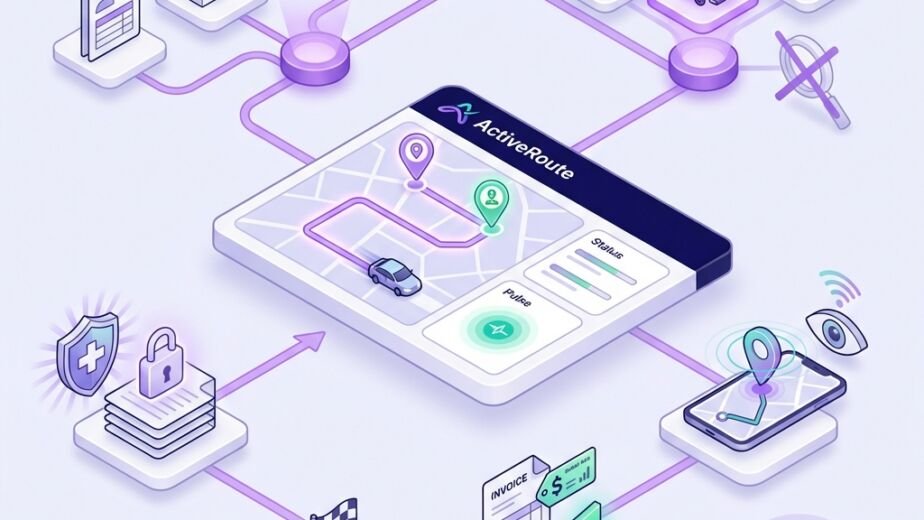
ActiveRoute is built around the specific workflows of NEMT dispatch. Dispatchers get a real-time map view of every vehicle in the fleet, automated trip assignment based on driver availability and vehicle type, and direct integration with major Medicaid brokers so manifests come in automatically.
Drivers use the ActiveRoute mobile app to receive assignments, navigate to pickups, collect signatures, and update trip status without any phone calls to the dispatcher. Every trip generates a complete digital record that feeds directly into billing.
The result is a dispatch operation that handles more trips with fewer errors, less manual work, and cleaner documentation for billing and compliance.
The Bottom Line
Dispatch software for NEMT is not just a scheduling tool. It is the operational core of your business. Choosing the wrong platform means manual workarounds, billing errors, and a dispatcher who is always one step behind. Choosing the right one means your operation scales without adding headcount and your billing team stops chasing paperwork.
If you want to see how ActiveRoute handles dispatch for a fleet like yours, book a live demo and walk through it with your actual trip scenarios.

Have any questions? Leave a comment below