

NEMT vs. Paratransit Software: What’s the Difference and Which Do You Need?
NEMT vs. Paratransit Software: What’s the Difference and Which Do You Need?
If you’re researching transportation software, you’ve likely come across both “NEMT software” and “paratransit software” used in similar contexts. They overlap in some ways, both involve scheduling rides for people who need assistance getting around, but they’re built around different regulatory and operational models. Understanding the distinction helps you choose software that actually fits how your organization operates.
What NEMT Software Is Built For
Non-emergency medical transportation (NEMT) software is designed around trips to and from medical appointments, dialysis, physical therapy, doctor visits, that are typically funded through Medicaid or private insurance and often coordinated through transportation brokers like Modivcare or MTM. NEMT software is built to handle broker sheet uploads, broker-specific billing rates, and the compliance requirements tied to medical trip documentation and HIPAA.
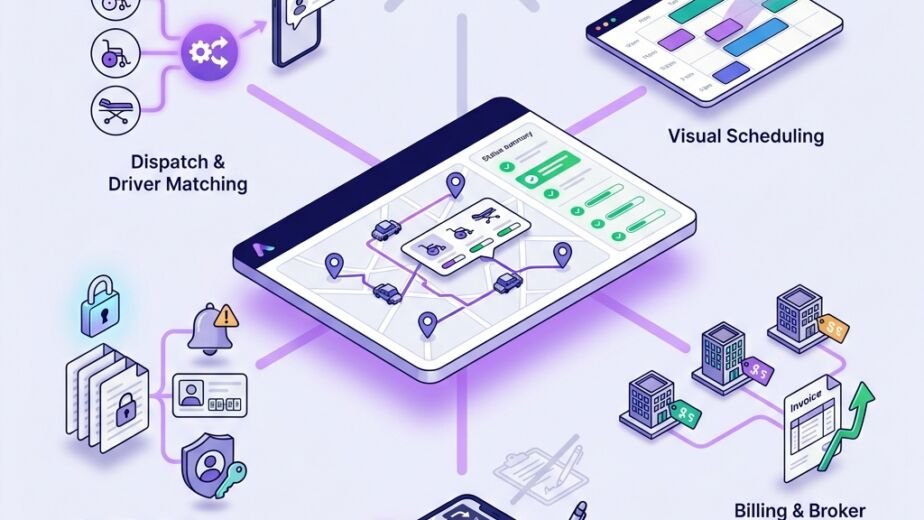
The core workflow centers on a broker or facility requesting a trip, a provider dispatching a vehicle matched to the patient’s needs (ambulatory, wheelchair, stretcher), and billing that reconciles against broker-specific rate structures.
What Paratransit Software Is Built For
Paratransit typically refers to public transit services, most often operated by transit agencies under ADA (Americans with Disabilities Act) requirements, providing transportation for individuals who can’t use fixed-route public transit due to a disability. Paratransit software is generally built around public agency requirements: eligibility verification, subscription trip scheduling (recurring rides), zone-based service areas, and reporting requirements tied to public transit funding and compliance.
Paratransit operations often deal with higher trip volumes on fixed service days and need software that handles recurring scheduling patterns efficiently, alongside public reporting obligations that private NEMT providers typically don’t have.
Where They Overlap
Both models share some common ground: vehicle-to-passenger matching based on accessibility needs, route optimization, and real-time driver tracking. Some software platforms serve both markets, offering configurable features depending on whether an operator serves broker-funded medical trips, public transit contracts, or both.
Key Differences at a Glance
| NEMT Software | Paratransit Software | |
|---|---|---|
| Primary funding | Medicaid, private insurance, brokers | Public transit agencies, ADA mandates |
| Trip type | Medical appointments | General mobility needs |
| Billing structure | Broker-specific rates | Agency contracts, subsidies |
| Key compliance | HIPAA | ADA, public transit reporting |
| Typical operator | Private transportation companies | Public transit agencies or contracted operators |
Which One Do You Need?
If your business primarily transports patients to medical appointments and bills through brokers or Medicaid, NEMT software is the right fit, it’s built around the billing and compliance realities of that specific model. If you’re operating under a public transit contract serving general mobility needs under ADA requirements, paratransit-focused software, or a platform with strong paratransit-specific features, will likely serve you better.
Some operators genuinely need both, particularly if they serve multiple contract types. In that case, look for a platform flexible enough to handle broker billing and agency reporting requirements simultaneously, rather than trying to force one system to do a job it wasn’t designed for.
The Bottom Line
NEMT and paratransit software solve related but distinct problems, shaped by different funding models, compliance requirements, and trip types. Choosing the right one comes down to understanding which regulatory and billing model actually describes your operation, not just picking whichever term sounds closest to what you do.


Have any questions? Leave a comment below