

NEMT Logistics Software: Streamlining Routes, Drivers, and Trip Management
NEMT Logistics Software: Streamlining Routes, Drivers, and Trip Management
Running a NEMT fleet involves more than just getting a patient from point A to point B. Behind every trip is a logistics operation: matching the right vehicle to the right patient, optimizing routes, tracking drivers in real time, and making sure nothing falls through the cracks when plans change mid-day. NEMT logistics software is built to manage that entire operational layer, not just the scheduling calendar.
What “Logistics” Means in NEMT
In a NEMT context, logistics covers everything that happens between a trip being requested and a trip being completed. That includes vehicle-to-patient matching (based on ambulatory, wheelchair, or stretcher needs), route planning and live traffic-aware navigation, real-time driver tracking, and the coordination needed when something changes, a driver calls out, a pickup runs late, a new same-day request comes in.
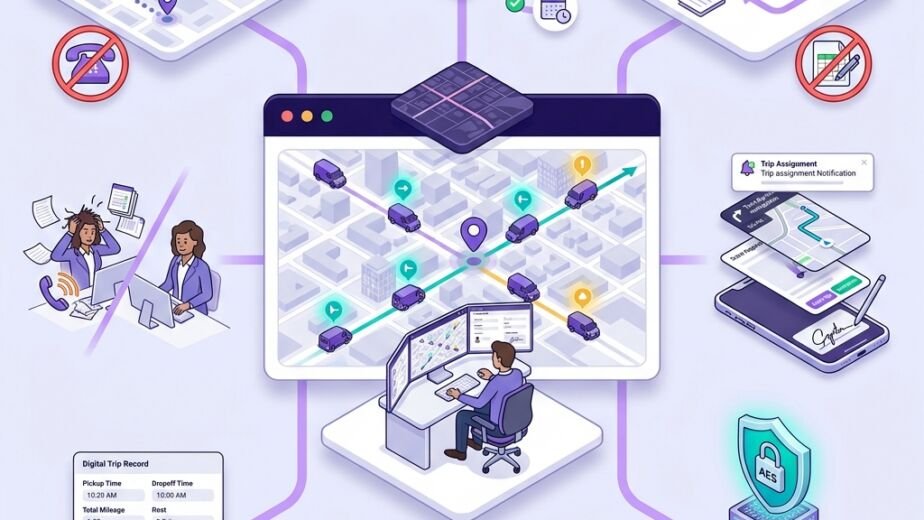
Without dedicated software, this logistics layer is usually managed through a combination of phone calls, whiteboards, and dispatcher memory. That works at small scale, but it breaks down fast as trip volume grows.
Core Components of NEMT Logistics Software
Automated vehicle matching
Every trip has specific requirements, vehicle type, timing, sometimes special accommodations. Logistics software matches incoming trips to available drivers automatically, rather than requiring a dispatcher to manually cross-reference every vehicle and schedule.
Live routing and navigation
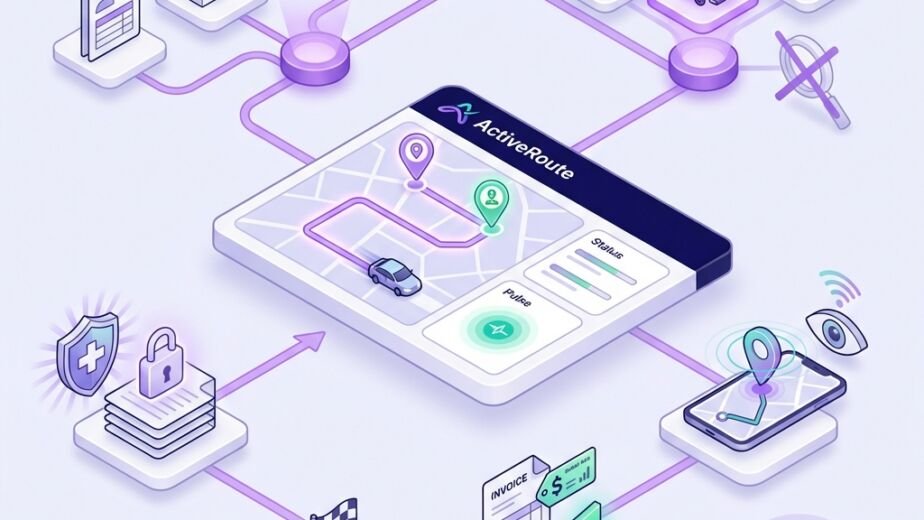
Drivers need real-time, traffic-aware navigation, not just a static address. Good logistics software integrates with mapping services like Google Maps so ETAs update automatically as conditions change, keeping both dispatchers and patients informed.
Real-time driver visibility
Dispatchers should be able to see exactly where every active driver is, without needing to call and ask. This is one of the most practical benefits of logistics software: it eliminates the reactive phone tag that eats up a dispatcher’s day.
Dynamic reassignment
Plans change constantly in NEMT. A driver calls out, a patient reschedules, a same-day request needs to be slotted in. Logistics software should let dispatchers reassign trips in seconds from a visual interface, not by rebuilding a schedule from scratch.
Why This Matters for Fleet Efficiency
The efficiency gains from logistics software aren’t just about saving dispatcher time, though that matters. They also show up in reduced dead miles (unpaid miles between drop-offs and the next pickup), fewer missed or late pickups, and better vehicle utilization overall. When routing and matching are automated well, fleets can handle more trip volume without needing to add dispatchers or vehicles at the same rate.
What to Look for When Evaluating Logistics Software
- Does vehicle matching happen automatically, or does a dispatcher still need to manually check availability?
- Is routing traffic-aware and updated in real time, or static?
- Can dispatchers see live driver locations without needing a separate tracking tool?
- How easily can a trip be reassigned mid-day if plans change?
- Does the system track dead miles, or only completed trip miles?
The Bottom Line
NEMT logistics software exists to remove the manual coordination burden from your dispatch team, automated matching, live routing, real-time visibility, and easy reassignment all work together to keep trips moving smoothly even when the day doesn’t go as planned. When evaluating a platform, the real test is how much of this logistics layer runs on its own versus how much still depends on a dispatcher managing it by hand.

Have any questions? Leave a comment below