

Non-Emergency Medical Transportation Software: How It Works and What to Look For
Non-Emergency Medical Transportation Software: How It Works and What to Look For
Non-emergency medical transportation software has moved from a nice-to-have to a genuine operational necessity for most NEMT providers. But if you’re comparing platforms, it helps to understand how these systems actually work under the hood, not just what features they advertise. This guide walks through the mechanics of NEMT software and what separates a platform that’s genuinely useful from one that just adds another login to your day.
How NEMT Software Actually Works
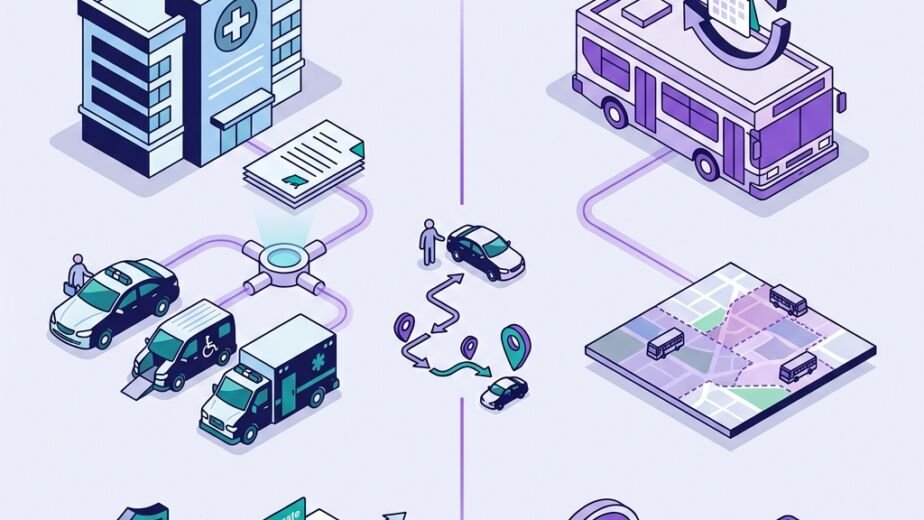
Non-emergency medical transportation software connects several moving parts into a single system: trip requests, driver assignments, real-time tracking, billing, and compliance documentation. Here’s the typical flow.
A trip request comes in, either through a broker sheet upload, a facility referral, or a direct patient booking. The software logs the request and, in a well-built system, automatically matches it to an available driver based on vehicle type, location, and schedule. The dispatcher reviews and confirms the assignment, the driver receives an instant notification, and the trip is tracked from pickup to drop-off. Once completed, billing calculations run automatically based on the account’s rate profile, and the record is stored for compliance and audit purposes.
That’s the ideal version. In practice, the quality of software varies a lot in how much of this is actually automated versus how much still requires manual intervention.
What Separates Good Software from Mediocre Software
Automation depth, not just features. Plenty of platforms list “automated dispatch” as a feature, but the real question is how much manual work is still required. Does the dispatcher have to manually search for an available driver, or does the system surface the best match instantly? Does billing require re-entering trip details, or does it pull directly from completed trip data?
Broker-specific handling. If you work with brokers like Modivcare or MTM, the software needs to handle their specific formatting and rate structures, not just generic invoicing. This is one of the biggest gaps between basic scheduling tools and true NEMT-specific software.
Compliance built in, not bolted on. HIPAA compliance, encrypted data storage, and audit trails should be core to the platform, not an add-on module. Given the sensitive nature of patient data in medical transportation, this matters more here than in most other industries.
Real-time visibility. Dispatchers and administrators should be able to see live trip status, driver location, and revenue data without waiting for end-of-day reports. Real-time visibility is what actually reduces phone calls and manual check-ins.
Questions Worth Asking Before You Choose
- How does the system handle a same-day trip cancellation or reschedule?
- What happens when a driver’s vehicle type doesn’t match any of today’s pending trips?
- Can I see real-time revenue broken down by broker account?
- How is patient data encrypted and stored, and is a signed Business Associate Agreement provided?
- What does the transition process look like if I’m switching from another platform?
The Bottom Line
Non-emergency medical transportation software should reduce the manual coordination that eats up a dispatcher’s day, not just move the same manual process onto a screen. When you’re evaluating a platform, focus less on the feature list and more on how much of the actual workflow, matching, billing, compliance, happens automatically versus how much still depends on your team doing it by hand.


Have any questions? Leave a comment below