
How to Start a NEMT Business in 2026: The Complete Step by Step Guide
Starting a Non-Emergency Medical Transportation business in 2026 is one of the most viable opportunities in the healthcare services sector. The demand for reliable, compliant patient transportation is growing every year driven by an aging population, expanding Medicaid programs, and a healthcare system that increasingly relies on transportation providers to keep patients connected to their care.
But starting a NEMT business is not as simple as buying a van and putting your number on a website. There are licensing requirements, insurance minimums, HIPAA obligations, broker credentialing processes, and operational systems you need to have in place before your first trip ever rolls out. Getting any one of those pieces wrong in the early stages can cost you contracts, fines, or worse.
This guide covers every step in order so you know exactly what to do, what to prioritize, and what to avoid when building your NEMT business from the ground up.
Step 1 Understand What the NEMT Industry Actually Is
Non-Emergency Medical Transportation is the service of transporting patients to and from medical appointments, dialysis centers, hospitals, therapy sessions, and other healthcare facilities when they are unable to use standard transportation independently. The word “non-emergency” is critical NEMT is not ambulance service. You are not responding to 911 calls or transporting critically ill patients. You are providing scheduled, reliable transportation for people who need assistance getting to routine medical care.
The NEMT industry is primarily funded through Medicaid, which means most of your revenue will come from broker contracts rather than direct patient payments. Medicaid transportation brokers companies like MTM, Modivcare, and LogistiCare are contracted by state Medicaid agencies to manage transportation benefits for Medicaid recipients. As a NEMT provider, you apply to become a credentialed transportation provider with these brokers, and they send you trips in your service area that you complete and bill back to them.
Understanding this broker model from day one is essential because it shapes everything — your vehicle requirements, your insurance minimums, your compliance obligations, and your billing processes.
Step 2 Choose Your Business Structure and Register Your Company
Before you can apply for any licenses or broker contracts, you need a legal business entity. Most NEMT providers operate as either an LLC or a corporation — both provide personal liability protection, which is essential in a business where you are transporting vulnerable patients.
Register your business with your state’s Secretary of State office. Choose a name that is professional, easy to remember, and available as a web domain — you will need a website later for credibility with brokers and private-pay clients. Once your entity is registered, obtain your Federal Employer Identification Number from the IRS. This is required for tax purposes and for every broker credentialing application you will submit.
Open a dedicated business bank account immediately. Mixing personal and business finances is one of the most common early mistakes NEMT operators make and it creates significant problems at tax time and during broker audits.
Step 3 Research Your State’s NEMT Licensing Requirements
NEMT licensing requirements vary significantly by state. Some states require a specific medical transportation license or certificate of need. Others require only a standard commercial transportation license. A small number of states have minimal licensing requirements beyond standard business registration.
Research your state’s specific requirements thoroughly before purchasing any vehicles or applying for broker contracts. The key licenses and certifications most states require include a business operating license, a commercial vehicle registration for each vehicle in your fleet, a state-specific transportation provider license where applicable, and driver certification requirements that vary by state but typically include background checks, drug testing, and defensive driving certification.
Contact your state’s department of health and department of transportation directly to confirm the exact requirements in your jurisdiction. Do not rely solely on third-party information — licensing requirements change and the consequences of operating without the correct credentials are severe.
Step 4 Secure the Right Insurance Coverage
Insurance is one of the most critical and most commonly underestimated startup costs for new NEMT providers. Standard personal vehicle insurance does not cover commercial medical transportation. You need commercial vehicle insurance specifically structured for NEMT operations.
The minimum coverage requirements are typically set by your state and by the broker contracts you will apply for. Most brokers require a minimum of $1 million in general liability coverage and $1 million in commercial auto liability per vehicle. Some states and brokers require higher minimums. You will also need workers’ compensation insurance if you have employees, and you should strongly consider professional liability insurance given the medical nature of the service.
Work with an insurance broker who has specific experience with medical transportation companies. General commercial insurance brokers often underestimate the coverage requirements for NEMT operations and policies that seem adequate may not satisfy broker credentialing requirements when you apply.
Step 5 Purchase and Equip Your Vehicles
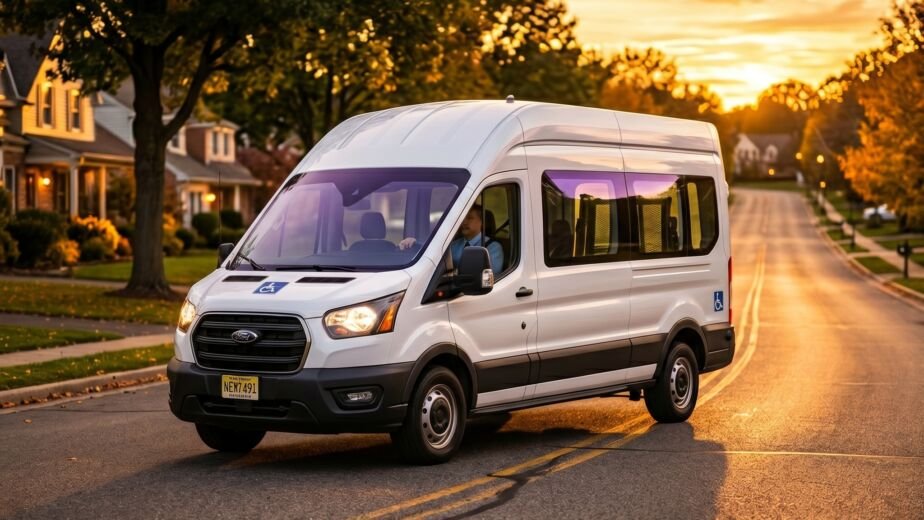
Your vehicle choices determine which types of trips you can accept and which broker contracts you qualify for. NEMT vehicles fall into three primary categories ambulatory vehicles for patients who can walk and climb into a standard vehicle, wheelchair accessible vehicles equipped with ramps or lifts and tie-down systems for patients who use wheelchairs, and stretcher vehicles for patients who must remain lying down during transport.
Starting with at least one wheelchair accessible vehicle significantly expands the types of trips you can accept from brokers, since wheelchair trips typically make up a large portion of Medicaid transportation volume. Ambulatory-only fleets are viable but limit your earning potential in most markets.
Every vehicle must meet your state’s inspection requirements and your broker’s vehicle standards before it can be used for NEMT trips. Most brokers require vehicles to be no more than a certain age — typically 7 to 10 years — and to pass a detailed inspection covering safety equipment, cleanliness, wheelchair securement systems, and operating condition before they will assign trips to that vehicle.
Step 6 Hire and Train Your Drivers
Your drivers are the face of your business. Every patient interaction, every on-time pickup, and every safety record either builds or damages your reputation with brokers and facilities. Hiring the right people and training them properly is not optional it directly affects your contract performance scores and your ability to retain and grow broker accounts.
At minimum, every driver you hire should pass a comprehensive criminal background check, a motor vehicle record check, a pre-employment drug test, and a physical examination. Most brokers require these as conditions of credentialing and audit compliance records regularly. Drivers transporting wheelchair or stretcher patients typically need additional certification in passenger assistance, securement procedures, and first aid or CPR.
Beyond compliance requirements, invest in training your drivers on customer service, punctuality, and patient communication. The patients your drivers transport are often elderly, disabled, or dealing with serious health conditions. Drivers who treat them with patience, dignity, and genuine care create the kind of reputation that generates referrals from facilities and long-term loyalty from private-pay clients.
Step 7 Apply for Broker Credentialing
This is where your NEMT business starts generating revenue. Medicaid transportation brokers are the primary source of trip volume for most new NEMT providers, and getting credentialed with the right brokers in your service area is the most important business development step you will take in your first year.
The major national brokers operating in most states include MTM, Modivcare, and Access2Care. Each broker has its own credentialing application process, but all of them will require your business registration documents, proof of insurance meeting their minimums, your vehicle inspection records, your driver credential documentation including background checks and certifications, and proof of your HIPAA compliance infrastructure.
The credentialing process typically takes four to eight weeks from application to approval. Apply to multiple brokers simultaneously do not wait for approval from one before applying to the next. During the waiting period, focus on building your operational infrastructure so you are ready to receive and execute trips the moment your first approval comes through.
Step 8 — Set Up Your NEMT Operations Software
This is the step that separates NEMT providers who scale successfully from those who plateau at 3 to 5 vehicles and burn out their dispatchers. Manual dispatching whiteboards, phone calls, paper logs works for your first few trips. It does not work for a real fleet.
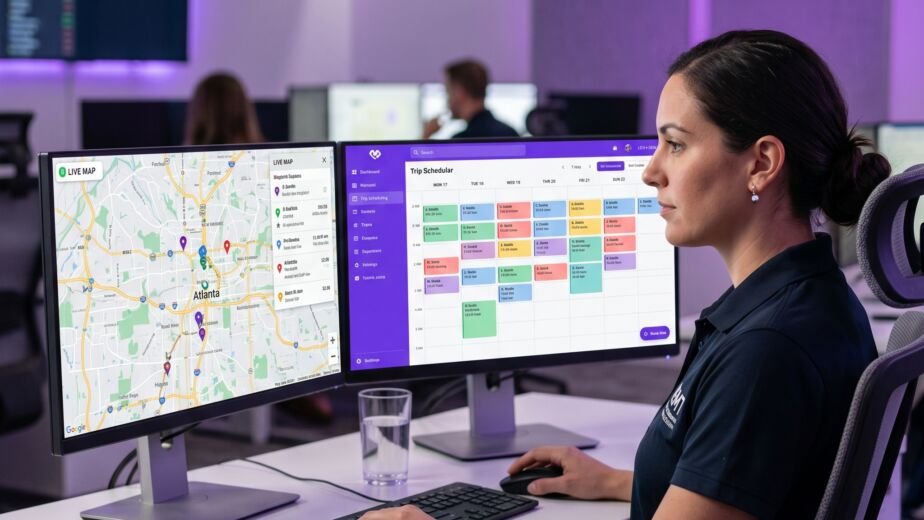
A cloud-native NEMT management platform handles dispatch scheduling, driver assignment, broker sheet uploads, rate management, compliance document tracking, driver mobile app workflows, and financial reporting in one system. The operational difference between a provider running manual systems and one running proper NEMT software is measured in hours saved per day and thousands of dollars recovered per month through accurate billing and eliminated administrative errors.
ActiveRoute is built specifically for small-to-medium NEMT providers who need enterprise-level operational capabilities without enterprise-level complexity or pricing. The platform handles every operational need from your first trip to your hundredth vehicle and because it is cloud-native, there is nothing to install and your team is live in under 24 hours.
Step 9 Build Your Private-Pay Client Base
Broker trips are the foundation of most NEMT businesses, but private-pay clients patients and facilities who pay you directly rather than through a Medicaid broker are where your margins are significantly better and your scheduling flexibility is greatest.
Build relationships with nursing homes, assisted living facilities, dialysis centers, cancer treatment centers, and rehabilitation facilities in your service area. These facilities need reliable transportation partners and will send you consistent volume if you demonstrate punctuality, professionalism, and reliable compliance documentation. ActiveRoute’s Facility Portal gives your facility partners a dedicated login to book trips, track patients, and view history without calling your dispatchers making you significantly easier to work with than competitors who require phone bookings.
For direct patient bookings, ensure your website has a professional HIPAA-compliant booking form. Private-pay patients searching for transportation services in your area should be able to find you easily and book directly without friction.
Step 10 Track Your Numbers and Optimize Continuously
The NEMT providers who build sustainable, profitable businesses are the ones who understand their numbers deeply and use that data to make better operational decisions continuously. Total revenue is not the number that matters most net revenue after dead miles, driver costs, fuel, and vehicle maintenance is the number you need to watch.
Track your dead miles the unpaid miles between trip drop-offs and the next pickup because they represent your single largest controllable cost after driver wages. Track your trip completion rate because brokers score you on it and low completion rates can result in reduced trip volume or contract termination. Track your on-time performance because it directly affects patient satisfaction, facility relationships, and broker scores simultaneously.
ActiveRoute’s reporting suite gives you all of these numbers filtered by driver, account, date, and route so you always know exactly where your business stands and exactly where your next optimization opportunity is.
The Bottom Line
Starting a NEMT business in 2026 requires more preparation than most people expect but the operators who do the groundwork correctly build businesses that are genuinely resilient, recession-resistant, and deeply needed in their communities. Healthcare transportation demand is not going to decrease. The question is whether your operation is built to capture it efficiently and serve it reliably.
Get your licensing right. Get your insurance right. Get your drivers right. Get your operations software right. And then execute every trip like your next contract depends on it because in the early stages, it does.
Ready to build your NEMT operation on the right foundation? ActiveRoute gives you the dispatch, compliance, and reporting infrastructure to run a professional fleet from day one. [Book a free demo today.]

You May Also Like

Have any questions? Leave a comment below